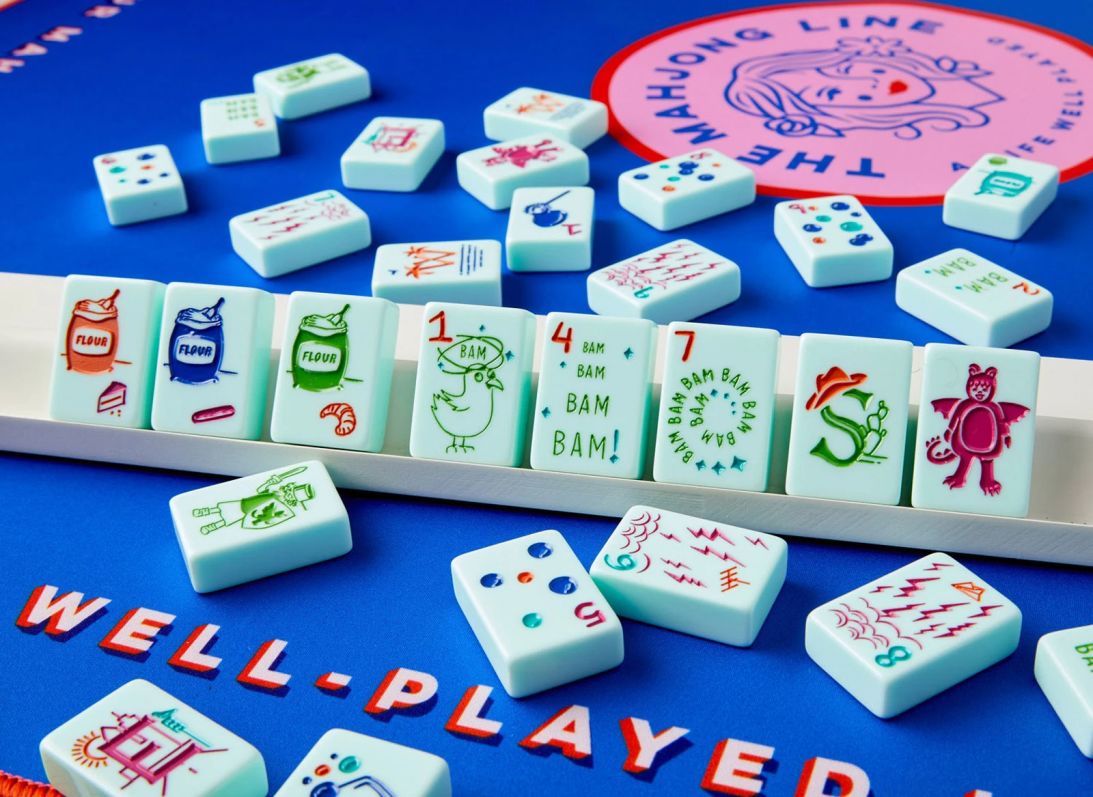
Mahjong tiles represent one of the most recognizable elements of traditional Chinese gaming culture. Their compact designs combine numbers, characters, natural imagery, and symbolic figures that have developed through a long history. Although the game has changed considerably across regions and generations, the visual identity of its tiles remains closely connected to ideas surrounding order, balance, nature, and social relationships.
The Origins of Mahjong Tile Design
Mahjong emerged in China during the nineteenth century, although historians continue to discuss its precise origins and development. Early forms gradually evolved into recognizable sets containing several categories of tiles. As the game spread throughout China and later to other countries, regional variations appeared in rules, scoring systems, and tile arrangements.
The traditional tile set commonly includes three numbered suits: Characters, Bamboos, and Circles. These categories provide the basic structure for forming combinations during play. In addition to their practical function, their imagery reflects cultural ideas that were familiar within the societies where mahjong developed.
Characters are represented through Chinese numerals, connecting the game directly with written language. Bamboo tiles feature repeated stalk-like illustrations, while Circle tiles display rounded symbols that have often been associated with coins or circular objects. Together, these designs create a visual system that allows players to distinguish different groups quickly.
Symbolic Meaning Behind the Tiles
The symbolism becomes more apparent when examining the Honor tiles. Wind tiles represent the four cardinal directions: East, South, West, and North. Their inclusion introduces geographical orientation into the structure of the game and gives individual tiles a relationship with a broader spatial system.
Dragon tiles provide another distinctive category. Traditionally represented by Red, Green, and White Dragons, these symbols have acquired different interpretations over time. Their importance within mahjong is partly practical because they form specific combinations, but their imagery also connects the game with longstanding Chinese cultural associations involving color, authority, and symbolic representation.
Flower and Season tiles, when included in a particular regional set, add another connection to the natural world. Flowers can represent beauty and renewal, while seasonal references establish a relationship between the game and the changing environment. Their appearance varies according to the design tradition of each set.
Balance as a Central Concept
The arrangement of mahjong tiles can also be examined through the idea of balance. Players continuously reorganize their hands as new tiles become available. Individual pieces gain practical value according to their relationship with neighboring tiles and possible combinations.
This characteristic creates an interesting relationship between isolated symbols and complete patterns. A tile that appears insignificant at one moment may become important after several subsequent draws. The changing value of individual pieces reflects the importance of context, adaptation, and observation within the structure of the game.
Mahjong also requires players to pay attention to discarded tiles and visible combinations. Memory becomes an important component because previously revealed information can influence how a player interprets the remaining possibilities. This combination of visual recognition and strategic organization has contributed to the game’s enduring intellectual appeal.
Traditional Imagery in Modern Formats
Technological development has introduced mahjong-inspired designs to digital environments. Modern interfaces can reproduce traditional tile shapes while adding animation, sound, lighting effects, and interactive features. These changes transform the presentation without necessarily removing the visual characteristics that identify the original tradition.
One contemporary example can be seen in Slot Mahjong, which incorporates recognizable tile imagery into a digital gaming format. The adaptation demonstrates how traditional symbols can be separated from their original physical setting and redesigned for an audience accustomed to screen-based entertainment.
Digital adaptation also allows designers to experiment with typography, color, movement, and three-dimensional rendering. A traditional dragon symbol, for instance, can be presented with animated effects that would be impossible on a physical tile. Nevertheless, the underlying visual reference remains recognizable.
The Role of Cultural Design in Digital Games
Developers working with Asian-inspired themes often study traditional visual elements before adapting them for modern audiences. PG SOFT is one developer associated with digital titles that use Asian cultural aesthetics as part of their visual presentation.
Such adaptations raise interesting questions about the relationship between cultural heritage and contemporary design. Traditional motifs can remain recognizable while their surrounding context changes substantially. The same symbol may appear on a physical table, in an illustrated publication, or within a digital interface, with each setting giving it a different visual purpose.
The continued use of mahjong imagery demonstrates how cultural symbols can remain relevant through reinterpretation. Tile designs provide a compact visual language in which numbers, directions, natural elements, and traditional characters coexist within a carefully organized system. This combination of function and symbolism helps explain why mahjong remains an important subject for examining the relationship between historical culture and modern visual expression.