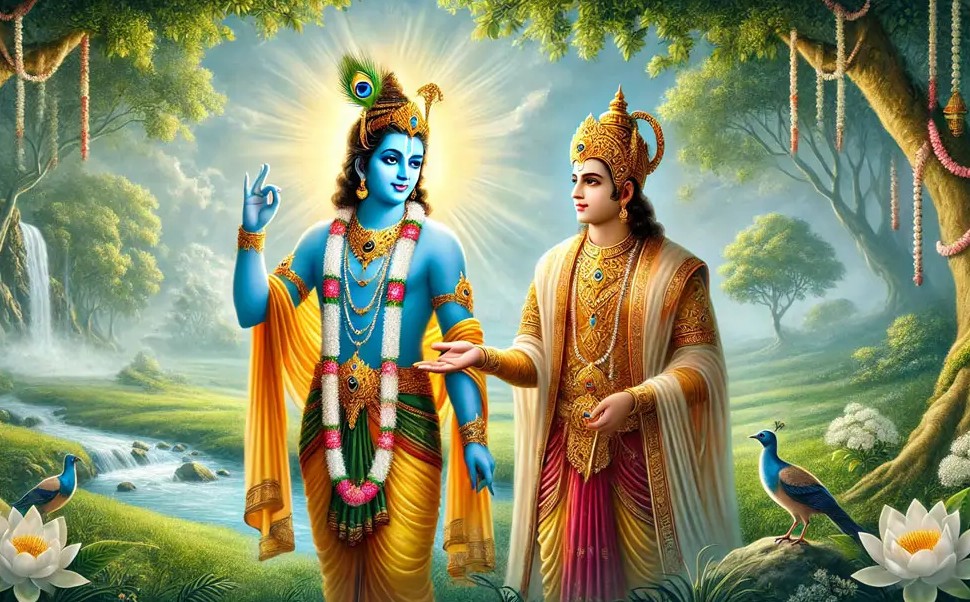
The Mahabharata narrates one of the most gripping episodes in Indian spiritual history: the game of dice that changed the fate of the Kuru dynasty. Long before the loaded dice rolled across the floor of Hastinapura’s grand sabha, Lord Krishna was fully aware of every consequence. Yet He did not stop the game. Life, in Krishna’s vision, is divine lila – sacred play – where joy, excitement, and even moments of calculated risk have their rightful place when guided by dharma. Today, countless people in India rediscover this ancient balance in fresh ways, finding echoes of that historic tension and thrill in experiences like the much-loved aviator game in India, a modern entertainment that captures the same breathless rise and release once felt in the royal assembly.
Krishna never condemned enjoyment itself. In the Bhagavad Gita, He teaches again and again that pleasure pursued with awareness becomes part of the divine flow, while obsession and greed become the chains that bind the soul. The tragedy of Yudhishthira was never the act of playing; it was the loss of discernment under the sway of attachment and deceit.
The Fateful Invitation in Hastinapura
When Shakuni challenged Yudhishthira, the eldest Pandava accepted because a kshatriya could not refuse a lawful invitation. What began as a royal pastime rapidly turned catastrophic. Wealth, kingdom, brothers, and even Draupadi herself were staked and lost. The hall that should have rung with courteous laughter fell silent under the weight of adharma.
Krishna, though physically absent that day, later comforted the devastated family and revealed the deeper lesson: every action ripens according to the consciousness that performs it. The dice were only instruments; the real game was played in the mind and heart.
Krishna: The Eternal Master of Play
Contrast this sorrowful episode with Krishna’s own life. As a child in Vrindavan He playfully stole butter, teased the gopis, and danced with fearless joy. As a youth He lifted Govardhana Hill as if it were a toy and subdued the serpent Kaliya through a dance upon his hoods. Even on the battlefield of Kurukshetra, Krishna’s chariot became a stage where cosmic truths were revealed amid the clash of armies.
The Lord embodied the truth that existence itself is playful. The universe, in the words of the scriptures, is Krishna’s krida – His eternal sport. Butter, mountains, serpents, or chariots – everything becomes an opportunity for celebration when offered to the Divine.
Dharma as the Unbreakable Rule of True Enjoyment
The Sanskrit term vihara signifies both recreation and the divine play of God. Traditional Indian culture has always made space for exhilaration within ethical boundaries. The vibrant chaos of Holi, the friendly contests of cards and dice during Diwali, the music and dance of Garba under the Navratri moon – all these are sanctioned expressions of human joy blessed by centuries of spiritual tradition.
Krishna’s teaching is clear: act without selfish desire, perform your duty with excellence, and offer the fruits to Me. When enjoyment arises from this surrendered attitude, it purifies rather than binds. A heart filled with gratitude transforms even ordinary moments into offerings.
Living the Gita in Contemporary India
India today pulses with energy. Ancient temples stand alongside gleaming cities, and millions seek harmony between tradition and the rapid rhythm of modern life. After fulfilling responsibilities at work and home, people naturally turn toward experiences that spark delight and momentarily lift the spirit.
The same thrill that once filled royal halls now finds new expressions online, where lights, sounds, and simple interactive entertainment bring smiles to faces across the country. These moments, when approached with the lightness Krishna displayed while playing His flute, become part of a balanced life rather than a distraction from it.
The Flute Player’s Eternal Song
Krishna’s flute never worried about the next note. It simply flowed, enchanting every listener. In the same way, when we live with awareness and gratitude, every experience – whether quiet meditation at dawn or an evening of shared laughter and excitement – becomes a note in the divine melody.
The Pandavas eventually regained their kingdom and fulfilled their dharma, emerging stronger because they learned detachment amid loss. Krishna’s ultimate message remains unchanged after thousands of years: perform your duties, embrace life fully, and remember that the entire cosmos is His loving playground.
As the Bhagavad Gita assures us in chapter 9, verse 22: “To those who are constantly devoted and who meditate on Me with single-minded contemplation, I provide what they lack and preserve what they already possess.” Under Krishna’s loving gaze, even our moments of joy become protected and sacred.
For deeper exploration of Krishna’s teachings on action and joy, the Bhagavad Gita As It Is by His Divine Grace A.C. Bhaktivedanta Swami Prabhupada remains an authoritative and widely respected presentation (available at the official site of the International Society for Krishna Consciousness).
In the end, the dice were never the problem. The heart that rolled them was. When we play – in any era, in any form – with a heart surrendered to Krishna, every throw becomes an act of devotion.